
Choosing a Custom Cord Set Supplier
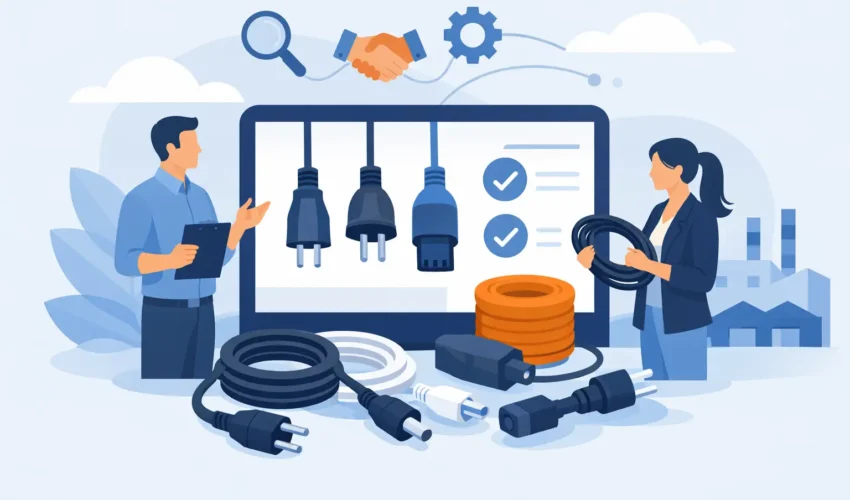

A cord set issue usually shows up late – during pilot builds, field installation, or after a compliance review catches a mismatch nobody flagged earlier. That is why choosing a custom cord set supplier is not a purchasing formality. For OEMs, ODMs, and industrial equipment teams, it is a specification decision that affects safety, approvals, production timing, and long-term serviceability.
In many organizations, cord sets are treated as a standard accessory until the application proves otherwise. A server platform may need a country-specific plug and precise length limits for rack routing. A medical or laboratory device may require stricter attention to approvals, jacket material, and strain relief durability. Food service and manufacturing equipment may need heavier-duty construction, special flexibility, or resistance to repeated handling. Once those requirements become real, the difference between a general reseller and a capable supplier becomes obvious.
What a custom cord set supplier should actually solve
A qualified custom cord set supplier should do more than quote a modified part. The real job is to align the cord set with the equipment, the end market, and the production environment. That starts with basics such as conductor size, voltage and amperage ratings, plug and connector configuration, jacket type, cord length, and termination method. But the work does not stop there.
The supplier also needs to understand where the product will be used and how it will be sold. Domestic and international requirements can change the plug pattern, marking needs, and certification path. A cord set for a controlled indoor environment is different from one used around heat, vibration, cleaning chemicals, or frequent movement. If the supplier cannot connect those use conditions back to the cord design, you are likely to spend time correcting preventable issues later.
This is where specification discipline matters. Engineering may focus on fit, current draw, bend radius, or connector retention. Procurement may focus on cost, lead time, and source continuity. Operations may care most about receiving consistency and packaging. A good supplier works across those functions instead of treating each request as an isolated transaction.
How to evaluate a custom cord set supplier
The first question is not whether the supplier can customize a cord. Most can make some change to length or plug style. The better question is how well they manage specification risk.
A dependable supplier should ask clear, practical questions early. What is the end equipment? Which market or country will receive it? What approvals apply? Is the cord customer-facing, installer-facing, or internal to a system? Will it be flexed, coiled, or routed through a tight enclosure? What is the expected annual volume, and what matters more right now – prototype speed, unit cost, or long-term production stability?
If those questions are missing, there is a good chance the quote is being built around a part number rather than the application. That can work for simple needs, but custom projects rarely stay simple once production scales.
Compliance and approvals are not a side issue
For many industrial and commercial products, compliance is where supplier quality becomes visible. The cord set needs to match the electrical and regulatory expectations of the finished equipment, not just function on a bench test. Plug type, cordage construction, temperature rating, and approvals all need to make sense together.
This is especially relevant for products sold into regulated or performance-critical markets. A mismatch between the specified equipment use and the supplied cord can create delays in certification, complications in customer acceptance, or expensive rework. The right supplier helps reduce that risk by understanding recognized standards, market-specific configurations, and the documentation needed to support sourcing decisions.
That does not mean every application requires the highest-cost configuration. It means the supplier should know where the line is between adequate and under-specified. In some products, a standard cord set is the correct answer. In others, the application justifies a more tailored build. The key is knowing which case you are in.
Material and construction choices affect field performance
A custom cord set often fails for mechanical reasons before it fails electrically. Flex cycles, pull forces, abrasion, heat exposure, and poor routing all shorten service life. That is why material selection deserves more attention than it often gets during sourcing.
Jacket material, conductor count, insulation type, molded versus assembled terminations, and strain relief design all influence how the cord performs in actual use. For example, a compact equipment enclosure may need a tighter bend profile, but reducing diameter too aggressively can create durability issues. A longer cord may help installation, but it may also create storage, packaging, or handling problems. A coiled or retractile design may solve footprint constraints, yet it adds different performance considerations around memory, extension force, and repeated movement.
A practical supplier will explain these trade-offs in plain terms. That is more useful than simply agreeing to every requested change.
Why supply continuity matters as much as price
Unit price gets attention because it is easy to compare. Supply continuity is harder to measure until a shortage hits production. For a custom cord set supplier, continuity means more than inventory. It includes component sourcing discipline, manufacturing consistency, realistic lead-time communication, and the ability to support repeat orders without specification drift.
This is particularly important when custom cord sets become embedded in finished equipment over multiple production runs. A low quote has limited value if the supplier cannot maintain the same build quality, documentation, and availability six months later. Engineering teams then spend time requalifying parts, and purchasing teams scramble for alternates under pressure.
The more specialized the requirement, the more valuable a stable supply relationship becomes. Custom plug combinations, nonstandard lengths, country-specific approvals, and application-specific materials all narrow the replacement options if the original source underperforms.
Sampling and documentation support are part of the job
In B2B sourcing, a sample is not just a courtesy item. It is a checkpoint for fit, routing, handling, and validation before larger commitments are made. A capable supplier should be able to support sampling in a way that helps both engineering review and procurement planning.
That includes confirming what is being sampled, what may still be provisional, and what production conditions could affect final delivery. Documentation matters here as well. Buyers need clear part definition, revision control, and specification confirmation so that approved samples do not quietly become different products later.
This is one reason experienced category suppliers tend to add value beyond fulfillment. They are better equipped to identify where a request is complete, where assumptions still exist, and what should be clarified before the order moves forward.
Common mistakes when selecting a custom cord set supplier
One common mistake is assuming that customization only means physical fit. In practice, fit is only one part of the requirement. Electrical rating, approvals, operating environment, and end-market destination can be just as important.
Another mistake is handing off an incomplete specification and expecting the supplier to infer the rest. Good suppliers can help fill gaps, but unclear inputs usually lead to delays, revised quotes, or samples that miss the target. When available, sharing drawings, intended use, installation constraints, and market requirements upfront improves outcomes.
A third mistake is focusing only on first cost. There are times when cost reduction is the right priority, especially on mature products with stable requirements. But in newer programs, pilot runs, or regulated applications, the lowest-cost option may create more total cost through delays, qualification issues, or field failures.
When a specialized supplier makes the most sense
Not every project needs a deeply customized solution. If the application uses a common configuration with standard ratings and no unusual market requirements, a standard product may be the best path. The point is not to force customization where it is unnecessary.
But when the cord set is tied closely to equipment design, market approvals, international deployment, or installation constraints, a specialized supplier becomes more valuable. The same is true when internal teams need practical sourcing support rather than a simple online order process. In those cases, category knowledge, documentation discipline, and responsiveness can save more time than they cost.
For buyers working across OEM, industrial, medical, commercial, or technical equipment programs, the best supplier relationship is usually the one that reduces uncertainty. High Tech Connections has built its role around that kind of support – helping engineering and purchasing teams source cord sets that fit the application, the compliance path, and the production reality.
A custom cord set is a small component until it delays a shipment or creates a service issue in the field. Choosing the right supplier is really about preventing that moment before it happens.
Leave a Comment