
How to Choose the Right Extension Cord for Every Space
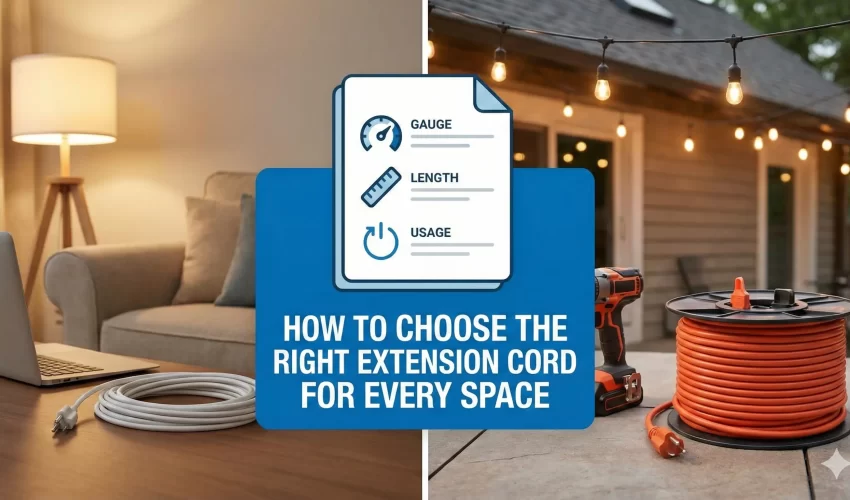
Key Takeaways:-
- Use the shortest, appropriate gauge cord to ensure power efficiency and safety.
- Choose outdoor-rated cords for external use or harsh environments.
- Hospitals and offices require certified, purpose-specific extension cords.
- SJT and hospital-grade cords provide long-lasting durability and reliability.
- Regular inspection and proper storage increase the lifespan of any extension cord.
- FAQs
Extension cords might seem like simple tools, but choosing the right one is crucial for both safety and performance. Whether you are a homeowner setting up holiday lights, a hospital manager powering essential equipment, or a contractor working on a busy site, the extension cord you use matters more than you think. Using the wrong type can lead to overheating, power drops, or even electrical fires. That’s why understanding how to pick the best cord for your environment is a smart and necessary step.
Importance of Extension Cords
An extension cord is more than just a power strip with a long cable. It’s a key component of any temporary electrical setup. Extension cord types vary based on the gauge of the wire, length, insulation, and intended use. Some are designed for light-duty household applications, while others are made for rugged outdoor or industrial use. Choosing the wrong one not only risks damaging your devices but could also void warranties or create hazardous conditions.
Key Factors to Consider When Choosing an Extension Cord
Length is one of the first things to consider. It’s tempting to buy a long cord “just in case,” but longer cords reduce power efficiency. The longer the cord, the greater the voltage drop, especially when powering high-demand tools or appliances. Always choose the shortest length that still meets your needs.
The wire gauge, or thickness, is equally important. Lower gauge numbers mean thicker wires, which can carry more electricity. For instance, a 12-gauge cord can handle more load than a 16-gauge one. If you’re using power tools or running heavy-duty equipment, choose a thicker cord.
Also, look for cords that have proper insulation and are rated for your intended use. Indoor cords should never be used outside. Outdoor-rated cords are made to withstand moisture, temperature changes, and UV rays. A SJT power cord, for example, is a versatile and durable option suitable for both indoor and outdoor use, depending on the rating.
Choosing Extension Cords for Home Use
In a home environment, most people use extension cords for TVs, lamps, or small appliances. For these low-power uses, a light-duty extension cord will generally suffice. But when you’re plugging in heaters, air conditioners, or other high-wattage devices, you must be more selective.
For kitchen appliances or vacuum cleaners, a medium-duty cord might be needed. Pay close attention to the power ratings of both your device and the cord. Never daisy-chain cords together to increase reach, and always unplug when not in use. If you’re using the cord temporarily for outdoor holiday lighting or yard work, consider a weather-resistant SJT power cord to ensure safety and longevity.
Best Extension Cords for Hospitals and Medical Facilities
Hospitals and clinics have a unique set of needs. Power reliability and safety are non-negotiable. In these environments, extension cords must meet strict standards, especially if they’re used around life-support or diagnostic equipment.
Use hospital-grade cords that meet UL or CSA requirements for medical settings. These cords are designed with reinforced jackets, higher conductivity, and grounding to prevent electrical interference. Extension cords in hospitals should be used temporarily and under supervision. A hospital-grade cord ensures minimal power fluctuation and higher resistance to physical wear and tear.
Never use household-grade cords in a medical setting, no matter how low the device’s power draw is. Every connection should be grounded, and cords should be replaced at the first sign of wear. Labeling and routine inspection are also essential to maintaining safety protocols.
Extension Cords for Office and Business Environments
In offices, extension cords are typically used for computers, monitors, printers, and chargers. While these devices don’t pull as much power as industrial equipment, safety should still be a priority. Opt for cords that include surge protection, especially if multiple electronic devices are connected.
Cable management also plays a role in offices. Flat extension cords that fit under carpets or are easily hidden behind furniture can reduce tripping hazards. Use cords that are UL-listed and match the amperage of your devices. Businesses should also train staff on the proper use and limitations of extension cords to avoid fire hazards or blown circuits.
In co-working spaces or tech-heavy offices, an SJT power cord provides both the durability and safety features necessary for powering multiple devices. These cords are built to handle higher currents and are more robust than regular household cords.
Ideal Extension Cords for Construction Sites and Industrial Settings
Job sites and industrial environments demand heavy-duty extension cords that can handle significant power loads and tough conditions. These cords often need to power drills, saws, compressors, or lighting rigs. Look for cords with lower gauge numbers (10 or 12 gauge) to support high current.
Durability is crucial. Construction sites are unpredictable, cords get dragged, twisted, stepped on, and exposed to oil, water, and chemicals. Choose cords with thick insulation, reinforced ends, and weather resistance. A hospital-grade cord might even be suitable in cleanroom or controlled environments in industrial settings due to its reliability.
Also, brightly colored cords can improve visibility and safety. OSHA recommends extension cords that are rated for outdoor use and checked regularly for damage. Never use damaged cords, and avoid coiling them tightly during use, as this can generate heat and lead to failure.
Cord Ratings and Certifications
When choosing an extension cord, always check the labeling. Terms like UL-listed, CSA-approved, or ETL-verified indicate the cord has been tested for safety and reliability. Match the cord’s amperage and wattage ratings to the devices you plan to use.
Also, understand the meaning of common codes on cords. For instance, “S” means it’s rated for general use, “J” indicates 300-volt insulation, “T” means the jacket is made of thermoplastic, and “W” or “W-A” means it’s safe for outdoor use. This is where an SJT power cord shines; it’s general-purpose, thermoplastic, and resistant to moisture and oil, making it an all-rounder for most use cases.
Maintenance Tips to Prolong Extension Cord Life
Even the best extension cord won’t last forever without proper care. Store cords in a cool, dry place and avoid bending or kinking them. When unplugging, always pull from the plug, not the cord. Regularly inspect for cuts, exposed wires, or melted sections.
If a cord feels hot during use, that’s a warning sign. It may be overloaded or not suited for the device it’s powering. Don’t tape over damaged areas; replace the cord entirely. Cleaning cords with a dry cloth and storing them properly on reels can also extend their lifespan. Using high-quality cords like a hospital-grade cord or SJT power cord reduces the chance of failure, but even premium products require care to maintain performance and safety.
FAQs
Can I use an indoor extension cord outside if the weather is clear?
No, indoor cords lack the insulation to withstand outdoor elements and should never be used outside, even temporarily.
What is the safest extension cord for medical equipment?
A hospital-grade cord is specifically designed for medical environments, ensuring safety, grounding, and consistent power flow.
How do I know which gauge extension cord I need?
Lower gauge numbers mean higher capacity. Use 12 or 10-gauge cords for high-power tools, and 14–16 gauge for smaller devices.
Are SJT power cords suitable for both indoor and outdoor use?
Yes, an SJT power cord is versatile, resistant to oil and moisture, and appropriate for both residential and commercial use.
Choosing the right extension cord isn’t about grabbing whatever is available; it’s about ensuring safety, efficiency, and durability for your specific needs. Ready to power up safely and reliably? Explore premium extension cords today at High Tech Connections, your trusted source for quality and durability. Contact them via email or by calling (614) 920-0853.
Leave a Comment