
Server Rack Power Cords That Fit the Spec
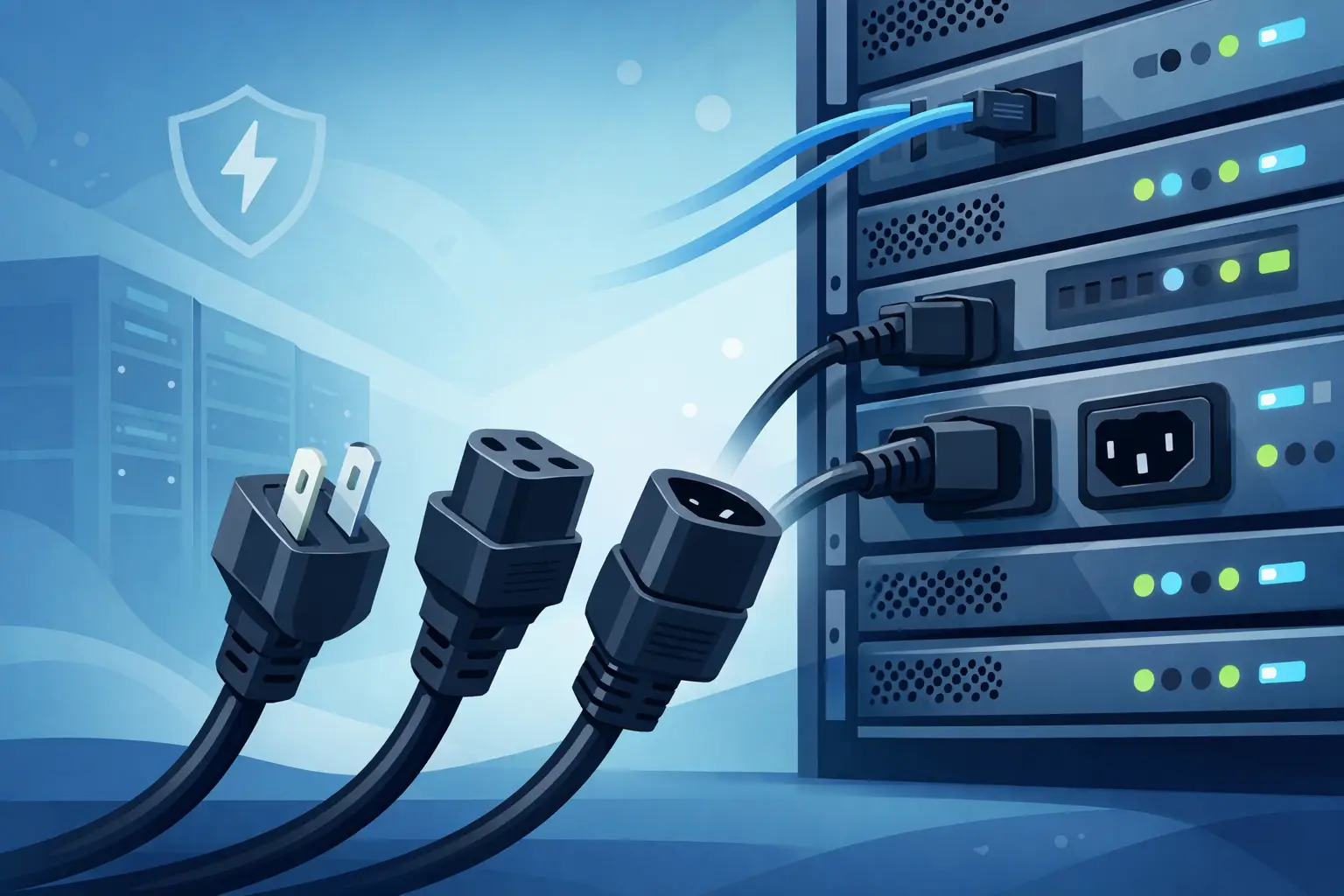
A rack build rarely fails because of the headline component. More often, the problem shows up in the last few feet of the power path. Server rack power cords are one of those details that can hold up deployment, create fit issues in dense cabinets, or introduce avoidable reliability concerns when the cord type does not match the equipment, PDU, or regional requirement.
For engineering teams and procurement groups, the right cord is not just a commodity line item. It has to match connector geometry, electrical ratings, regulatory needs, bend constraints, and the realities of service access inside the rack. In high-density environments, even a small mismatch can force rework, crowd airflow, or complicate maintenance after installation.
What matters most in server rack power cords
The starting point is straightforward: the cord must match both ends of the connection and carry the intended load safely. In practice, that means verifying plug and connector type, current rating, voltage, conductor size, jacket suitability, and cord length. If one of those variables is off, the cord may still appear usable at first glance, but it may not support the application the way the equipment design requires.
This is especially relevant in server racks because the environment is constrained. Power strips and PDUs may be mounted vertically or horizontally. Equipment in the same cabinet may have different inlet types. Some installations prioritize tight cable routing, while others need enough slack for service loops or slide-out access. A cord that is electrically correct but physically awkward can still create operational problems.
There is also the issue of standardization. Many organizations try to reduce inventory complexity by limiting the number of cord configurations they stock. That approach can help, but only if the selected set of server rack power cords actually covers the variety of devices in the field. Otherwise, teams end up using adapters, extensions, or substitutions that were never part of the original plan.
Matching the cord to the rack power path
Most buying errors happen when the cord is treated as generic rather than application-specific. A server, switch, storage device, or UPS may have an IEC inlet, but that does not mean every IEC cord is interchangeable. The inlet type, the PDU output, and the branch circuit all have to line up.
Connector types and equipment compatibility
In rack environments, common configurations often involve IEC connector families, but the exact combination matters. A cord with the wrong female connector will not mate with the equipment inlet. A cord with the wrong plug will not connect to the PDU or facility outlet. Even when two options look similar, they may be keyed differently or rated for different loads.
This becomes more complicated in mixed environments. Some racks include legacy hardware alongside current-generation systems. Some OEM equipment ships for multiple markets and uses different input arrangements depending on destination. For purchasing teams, that means the approved cord list should be based on actual equipment interfaces, not assumptions carried over from prior builds.
Electrical rating is not a paperwork detail
Amperage, voltage, and wire gauge should be confirmed against the real load and the applicable safety requirements. Oversimplifying this step can create unnecessary risk. A lower-rated cord may physically connect, but if it is not designed for the application, it can run hotter, wear faster, or fail compliance review.
On the other hand, specifying a heavier cord than needed is not always the best answer. Larger conductors increase bulk and stiffness, which may make routing harder in a tightly packed rack. The practical choice is the cord that meets the required rating with a construction suitable for the installation, not simply the largest available option.
Why length and routing deserve more attention
Length is one of the most underestimated variables in server rack power cords. A cord that is too short can place stress on the connector or make it impossible to route cleanly to the PDU. A cord that is too long creates excess slack, which takes up space, obstructs airflow, and complicates cable management.
In dense cabinets, cord routing affects more than appearance. It influences serviceability and thermal performance. When technicians need to replace a device, power cords that are bundled too tightly or looped excessively can slow the work and increase the chance of disturbing adjacent connections.
The best length depends on the rack layout. Vertical PDUs often favor shorter runs for nearby equipment, while horizontal power distribution may require different measurements. Slide rails, rear clearance, and door depth also matter. A practical sourcing approach is to review the physical path, not just the point-to-point distance.
Straight, angled, and low-profile options
Connector orientation can make a major difference in a crowded rack. Straight connectors may be fine in open layouts, but right-angle or low-profile terminations can reduce protrusion and improve clearance near doors, side panels, or neighboring equipment. That does not make angled connectors better in every case. Their usefulness depends on the inlet position and the routing direction required.
This is a good example of where application detail matters. Two racks with the same equipment may need different cord configurations based on PDU placement or airflow strategy. Standardization still has value, but it should not come at the cost of a poor mechanical fit.
Compliance, durability, and consistency in supply
For commercial and industrial buyers, the cord specification is tied to more than fit. It also has to support regulatory expectations, product quality standards, and repeatable sourcing. If the equipment is heading into a regulated or performance-critical setting, the documentation and approval profile of the power cord may carry the same importance as the connector itself.
Material quality and manufacturing consistency also affect long-term performance. Server racks are not usually harsh in the same way as factory-floor mobile equipment, but cords still see heat, repeated handling during service, and constant connection over long periods. Jacket quality, termination integrity, and overall build consistency matter when uptime matters.
Supply continuity deserves equal attention. A perfectly specified cord is less helpful if it becomes difficult to source in production quantities or maintain across future builds. For OEMs and purchasing teams, it is worth asking whether the cord can be supplied consistently, whether alternates exist, and whether sample support is available before a larger buy is committed.
When custom sourcing makes sense
Not every rack application needs a custom cord. Many can be addressed with standard configurations if the specification work is done carefully. But there are cases where custom sourcing is the more efficient path.
That is often true when equipment spacing is unusual, connector orientation is restrictive, color coding is needed for field identification, or a particular combination of plug, connector, and length is not readily available as a standard item. Customization can also help reduce excess cable, improve cabinet organization, and support consistent installation practices across multiple sites.
The trade-off is lead time and minimum order planning. Custom solutions can solve persistent fit or routing problems, but they typically require earlier coordination between engineering, purchasing, and the supplier. For programs with repeated builds or controlled equipment configurations, that effort often pays off. For one-off installations, a well-chosen standard cord may be the more practical option.
High Tech Connections works with buyers who need both approaches – standard product coverage where it fits and specification-based sourcing support when the application calls for something more exact.
A practical buying approach for server rack power cords
The most effective purchasing process starts with a short set of verified inputs: equipment inlet type, source-side plug or connector, required electrical rating, target length, and any physical routing constraints inside the rack. From there, teams can narrow options quickly and avoid common substitutions that create problems later.
It also helps to involve both engineering and operations early. Engineering may focus on ratings and compatibility, while operations sees the real impact of cord bulk, routing, and service access. When both views are considered, the resulting selection is usually more durable in production and easier to support in the field.
If there is one recurring lesson in rack power planning, it is this: small components deserve the same specification discipline as major ones. Server rack power cords do not attract much attention when they are selected correctly. That is exactly the point. The right cord disappears into the installation and keeps the system moving.
Leave a Comment